
Eviction After Section 21: The Evidence UK Landlords Need for Section 8
Section 21 is being phased out. This guide explains what evidence courts and councils actually look for in Section 8 cases — and includes a free eviction-ready pack with templates for landlords.
Why Evidence Will Decide Possession Cases After Section 21
Section 21 is being phased out. For many landlords, that means possession decisions will increasingly depend on evidence rather than intention - especially where Section 8 is relied on. (Official GOV.UK guidance)
Last updated: 9 January 2026 (England). Rules may change — check official guidance if you’re dealing with a live case.
Key takeaways
- Judges decide on proof: dated records beat memory and screenshots.
- Continuity matters: gaps (rent history, repairs, certificates) get challenged.
- Timelines win: show what happened, when, and what you did next.
Why evidence matters more after Section 21
When things go wrong in a tenancy, outcomes are rarely decided by what a landlord “meant to do”. They are decided by what can be proved with a clear paper trail.
In a post-Section 21 landscape, landlords who keep organised, time-stamped records are far better placed than those trying to reconstruct events months later from memory, scattered emails, and screenshots. (What changes after the Section 21 ban)
The 4 evidence pillars most cases rise or fall on
If you only remember one thing: most possession disputes boil down to these four evidence streams.
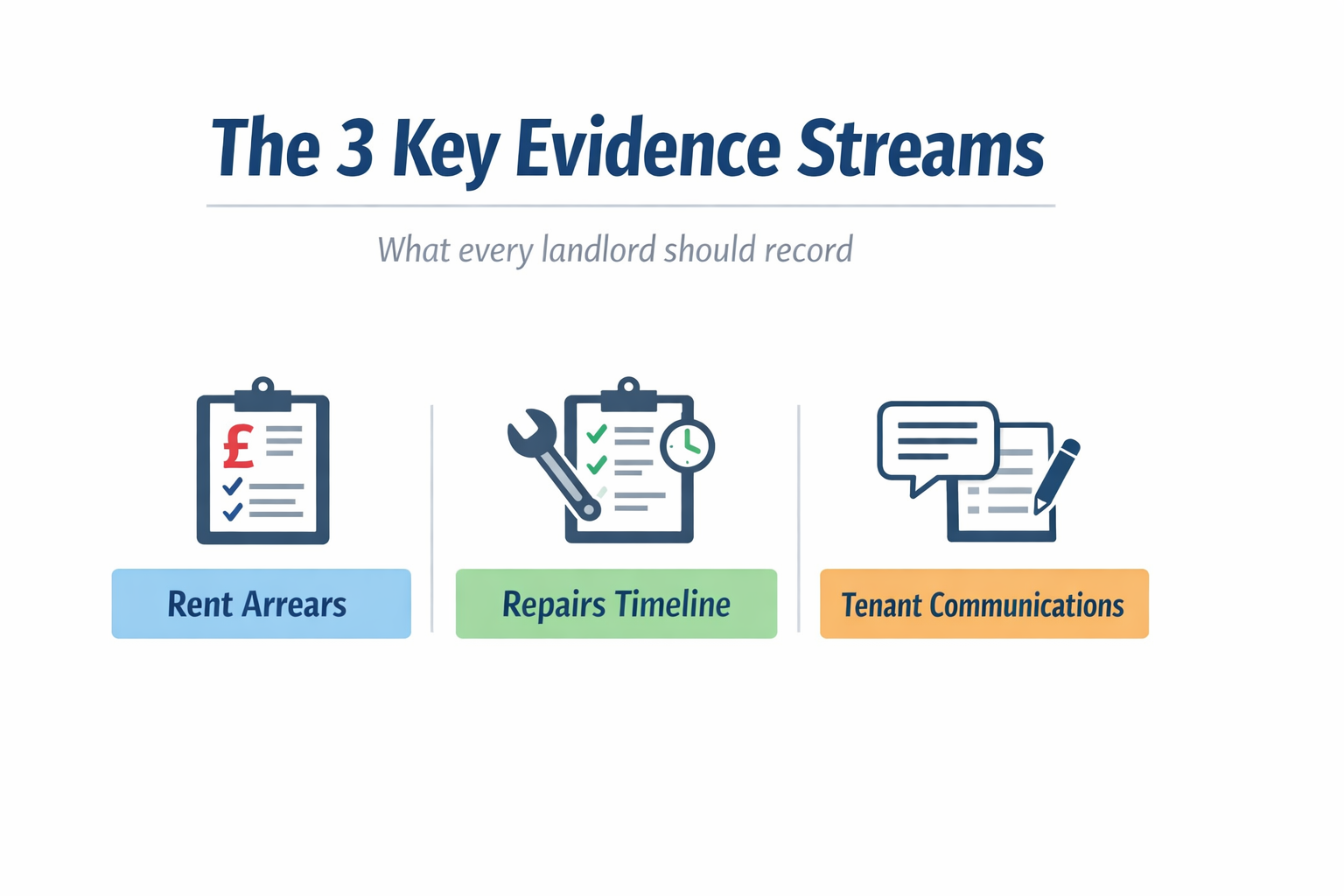
1) Rent evidence
A rent ledger should make arrears obvious at a glance. If a judge has to do maths, your case is weaker than it needs to be. You want dates, amounts, and a running arrears total.
2) Repairs & condition evidence
Disrepair disputes often turn into “reasonableness” tests: did you respond promptly, inspect, book works, and follow up? A timeline beats a paragraph every time.
3) Communication evidence
When a tenant alleges you ignored them, your defence is simple: dated messages, summaries, and follow-ups. If it isn’t written down, it didn’t happen.
4) Safety & compliance continuity
It’s not enough to “have a certificate”. What matters is whether it was valid across the tenancy, with no gaps, and whether documents were served when required.
What decision-makers look for (courts, councils, ombudsman)
Different bodies have different processes, but they consistently care about the same things:
For the official overview of how possession actions typically run, see Understanding the possession action process (GOV.UK) .
- Timelines: clear dates and sequence of events
- Consistency: your records match your claim
- Written evidence: messages, notes, invoices, photos, statements
- Absence of gaps: especially in rent history and compliance validity
Common evidence mistakes that weaken otherwise strong cases
These are the gaps that get picked apart when evidence is assembled too late.
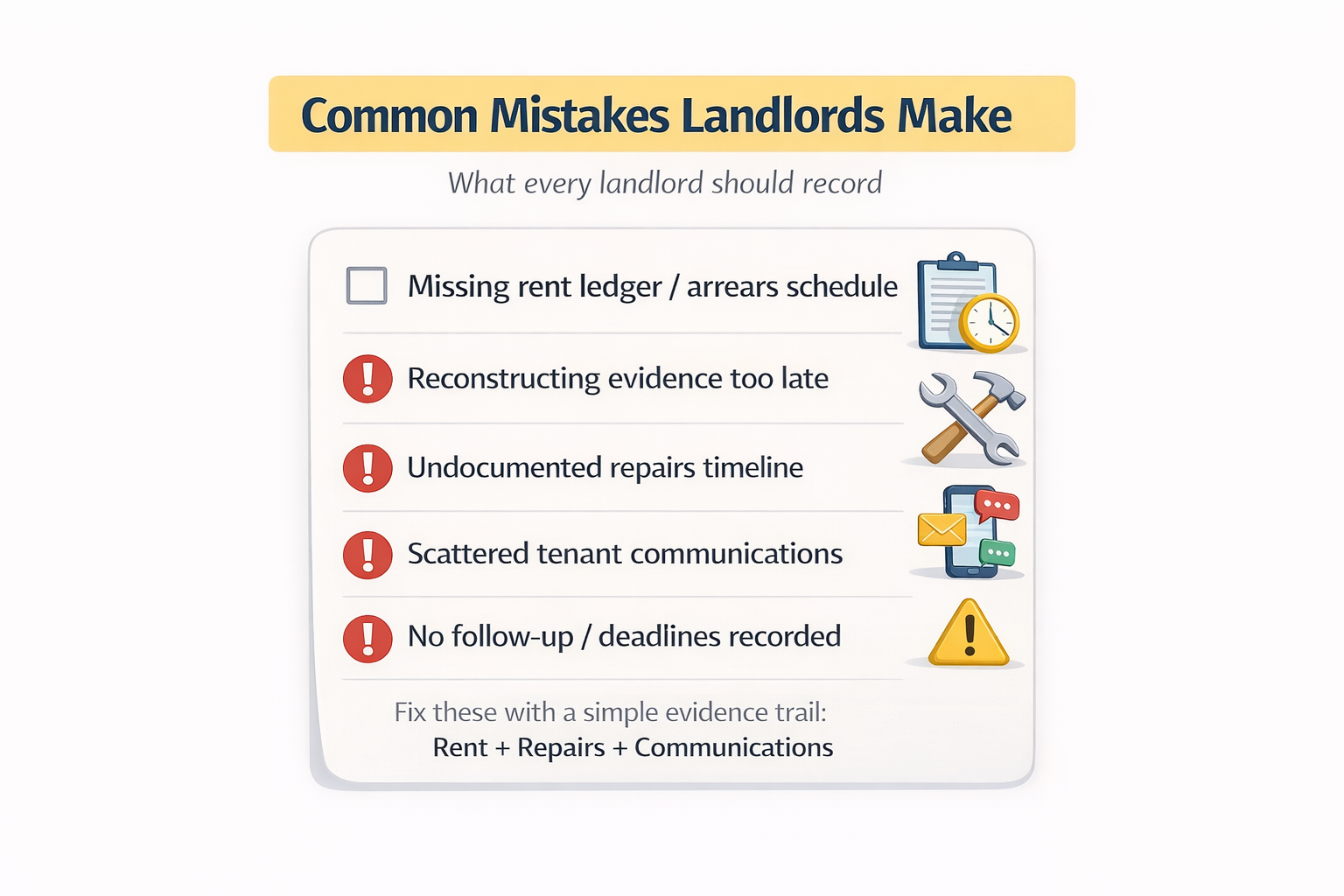
- “I have the certificate… I’m just not sure if it lapsed.”
- “We spoke on the phone but didn’t log it.”
- “Repairs were done but there’s no timestamped evidence.”
- “Documents are scattered across emails, WhatsApp, and folders.”
- “Arrears are shown month-by-month, but no running total.”
Want the templates?
If you’re building evidence now (before a dispute), the free pack gives you court-ready logs you can start today.
Get the free Evidence PackWhy manual tracking breaks down over time (especially certificates)
If you want the wider reform context (Property Portal, Ombudsman, and why evidence becomes non-negotiable), see: Renters’ Rights Bill 2025: what landlords must prepare for .
Spreadsheets can be a strong start - until drift sets in:
- annual renewals shift (“annual drift”)
- remedials get completed but not recorded
- multi-year tenancies create compliance blind spots
- evidence sits in different places (emails, PDFs, photo albums)
The key idea: continuity
In real disputes, it’s often the gaps that get challenged — not whether you can find a certificate today.
Tenancy Start ─────────▶ Today
| Gas Cert |   GAP   | Gas Cert |
Free download: Eviction-Ready Evidence Pack (Post-Section 21)
To make this practical, we created a free pack that does two things: (1) resets the mental model of what evidence matters, and (2) gives you simple, court-ready templates you can start using today.
Included PDFs
- Eviction-Ready Evidence Checklist
- Certificate Continuity Risk Guide
- How to Use This Pack
Included templates
- Rent Ledger & Arrears Schedule (with running arrears total)
- Repairs & Condition Timeline Log (focus: reasonableness)
- Tenant Communications Log (with follow-up tracking)
How to use the pack (the 10-minute setup)
- Create one folder per property (Repairs, Rent, Certificates, Comms).
- Start using the logs now - not when there’s a problem.
- Link evidence (photos, invoices, bank refs) rather than relying on notes.
- Export your logs before disputes escalate or notices are served.
Where CertNudge fits (calm, factual)
This pack will help you keep stronger records - but it also highlights why certificates are the hardest part to defend with manual tracking over time.
CertNudge exists to solve certificate continuity: storing documents per property, tracking expiry dates, and helping landlords export evidence quickly when it matters.
FAQ
Quick answers to the most common questions about evidence and post-Section 21 possession routes.
Is this pack legal advice?
No. It’s a practical evidence framework and templates. For legal advice on an active case, speak to a solicitor.
Is Section 8 the only route after Section 21?
The exact process depends on legislation and timing. In general, where “no-fault” routes reduce, landlords rely more on evidence-backed possession routes. The point is: evidence becomes more important either way.
What’s the single most important improvement a landlord can make?
Keep a rent ledger with a running arrears total and a repairs log that proves reasonable action and access attempts.