The Renters Rights Bill 2025: What UK Landlords Must Prepare for Now
The Renters’ Rights Bill will reshape the private rented sector in 2025. This guide explains what landlords must prepare for, including Section 21 abolition, the new Property Portal, Awaab’s Law deadlines and the extended Decent Homes Standard.
The Renters’ Rights Bill: A Landlord’s Survival Guide for 2025

Introduction: What This Bill Really Means for Landlords
The Renters Rights Act 2025 is one of the most significant overhauls of the private rented sector in decades. Having received Royal Assent on 27 October 2025, the new framework is confirmed and will be implemented in stages from 2026:
Key Changes at a Glance:
- Section 21 is being abolished
- A national Property Portal will become mandatory
- Awaab’s Law repair timelines will apply to private landlords
- The Decent Homes Standard will extend beyond social housing
For many landlords, especially those managing HMOs or multiple properties, this creates real anxiety. The rules are tightening, enforcement is expanding, and documentation is becoming central to proving that a property is safe, compliant, and well managed.
This guide translates the legal and political noise into practical steps. Instead of theory, you’ll learn exactly what evidence, certificates, logs, and processes you will need in place to stay fully compliant - and ready for inspection - as the new tenancy rules start from 1 May 2026 and the wider reforms (portal, ombudsman and Decent Homes Standard) are phased in.
📄 Free Checklist: Landlord Survival Checklist 2025
Download our printable, step-by-step checklist covering everything you need to prepare for the Renters’ Rights Act — including Section 21 changes, Awaab’s Law, new repair deadlines, and Property Portal requirements.
Download the Checklist (PDF)The Private Rented Sector Database (Property Portal)

What It Is
The Property Portal is a new national database where every landlord must:
- Register themselves
- Register every rental property
- Upload (or confirm) required safety documents
- Keep their compliance record updated
Think of it as a single, central “digital logbook” for rented homes—similar to how the DVLA records vehicle information.
Councils will gain streamlined access to this database, and tenants will be able to check whether a landlord or property is properly registered.
Why It Matters
Once active, the portal becomes a pre-screening tool for enforcement. Councils will no longer depend on tenant complaints - they will be able to:
- Automatically identify unregistered properties
- See which landlords are missing safety documents
- Track repeat offenders
- Issue fines or banning orders more easily
Non-registration is expected to carry financial penalties, and in serious cases, a landlord could be banned from operating.
If your documents are not organised, you will struggle to register - and you may face penalties.
What You Will Likely Need to Upload
While final regulations are still being drafted, the government has outlined the core data it wants the database to hold. The exact list will be confirmed in regulations and guidance, but on current plans you should expect to provide at least the following information, with further detailed requirements to be set in secondary legislation:
- Landlord Information
- Name
- Correspondence address
- Contact details
- Company information (if applicable)
- Property Information
- Full address
- Tenure
- Whether it is an HMO
- Number of occupants
- Number of storeys
- Compliance Documents
Based on current proposals, you should be prepared to upload or confirm at least the following where applicable:
- Gas Safety Certificates
- Electrical Installation Condition Reports (EICR)
- EPC
- HMO licence (where applicable)
- Fire alarm test records (HMOs)
- Emergency lighting certificates (HMOs)
- PAT testing documentation (if providing appliances)
- Legionella risk assessment
Current policy direction suggests the portal and wider enforcement framework are likely to place growing weight on:
- Proof of repair history
- Damp and mould response logs
- Notes from property inspections
This is because Awaab’s Law and the Decent Homes Standard (explained later) rely heavily on evidence.
How to Prepare
The most effective way to prepare is to create a complete digital compliance logbook for each property:
- All certificates
- All expiry dates
- All repair logs
- All inspection notes
- All supporting documents
This ensures that when the portal opens, registration is a simple data-entry task - not a last-minute scramble through email chains and PDF folders.
Tip from the compliance experts: Most landlords will find it difficult to maintain this level of evidence manually. Platforms like CertNudge automate certificate tracking, expiry dates, store all safety documents in one place, and give you a clear compliance status for every property — helping you stay prepared for the Property Portal, the Ombudsman, and Section 8 evidence requirements.
The New Private Rented Sector Ombudsman
What It Is
Alongside the Property Portal, the Bill introduces a mandatory Ombudsman for the private rented sector. This service will provide a fair, impartial, and binding resolution to disputes between landlords and tenants—without the need to go to court.
Why It Matters
Currently, tenants often have to take legal action to enforce their rights, which is costly and slow. The Ombudsman changes this. Tenants will be able to complain directly to the Ombudsman about:
- Repairs and maintenance issues
- Unfair behaviour
- Issues with the tenancy
The Ombudsman will have the power to:
- Compel landlords to issue an apology
- Require landlords to provide information
- Order landlords to take remedial action
- Order landlords to pay compensation (currently expected under government policy and professional guidance to be capped at around £25,000 per case, in line with government and industry guidance)
The End of Section 21: Why Your Paperwork Now Controls Your Ability to Evict
The Key Change
The End of Section 21 and Fixed Terms
Under the new Act, fixed‑term Assured Shorthold Tenancies (ASTs) are being abolished, and all assured tenancies will operate as periodic tenancies with no fixed end date. From the implementation date (currently set for 1 May 2026), all assured tenancies in England will move to the new system in one stage, with existing fixed terms converting to periodic (rolling) tenancies and all new tenancies starting as periodic from day one.
- No Fixed Terms: You can no longer bind a tenant to a 6 or 12-month fixed term. Tenants can leave at any point with 2 months' notice.
- No Section 21: No-fault evictions are banned. To regain possession, you must prove a specific legal ground under Section 8 (e.g., selling the property, moving in, or tenant fault).
On paper, Section 8 sounds simple:
You can typically only evict if the tenant is at fault (arrears, anti-social behaviour) or for specific "no-fault" reasons defined in law: selling the property or moving yourself/family in.
But in practice, Section 8 is only effective if:
- Your documentation is perfect
- You can prove compliance throughout the tenancy
- You can evidence repairs, responses, and safety work
Missing paperwork will directly weaken or even invalidate your possession claim.
What Section 21 Used to Hide
Section 21 provided a safety net. Even if:
- You misplaced a Gas Safety Certificate
- You served a How to Rent Guide late
- An EICR was delayed
- A repair took longer than planned
…you could still often regain possession.
Once Section 21 disappears, every missing or late document becomes a potential legal challenge.
Section 8 Will Require Evidence
To regain possession under Section 8, you will need to be able to show:
Proof of safety compliance
- Gas Safety Certificates were valid for the entire tenancy
- EICR was valid and any remedial works completed promptly
- EPC was provided at the start
- Fire safety obligations were met
- HMO licence (if required) was in place at all times
Proof of repair management
- That you responded appropriately to repair requests
- That you dealt with hazards (especially damp and mould) on time
- That you met Awaab’s Law deadlines (covered below)
- That you can demonstrate timelines and communication
Proof of administrative compliance
- Tenancy information was correctly served
- Deposit protection requirements were met
- Right-to-rent obligations were met
If a tenant disputes your claim, the court will expect you to produce your records. Without them, you are at risk of:
- The court dismissing your claim
- Delays of many months
- Paying the tenant's costs
- Being unable to re-serve a notice until compliance is corrected
The 12-Month "No-Serve" Period
Be aware: You are legally barred from using the ‘Moving In’ or ‘Selling the Property’ grounds (Grounds 1 and 1A) during the first 12 months of a tenancy, because tenants have a 12‑month protected period at the start of the tenancy.
- Planning: If you let a property, you are effectively guaranteeing it is available for at least one year.
- Notice: Once the first 12 months have passed, you must give 4 months’ notice if you use these grounds, giving tenants more time to find a new home.
What Landlords Should Do Now
Instead of relying on memory, paper files or scattered emails, create a structured record for every property:
- Safety certificates and expiry dates
- Repair timeline logs
- Communications with tenants
- Inspection notes
- Copies of all documents served at tenancy start
- Evidence of remedial works
Having this ready now ensures that once Section 21 is removed, you are not scrambling to recreate a history that the court expects to see in full.
The Ban on Rental Bidding and "In-Contract" Increases
The Bill introduces strict controls on how you set and increase rent.
1. The Ban on Bidding Wars
From the start date, you (and your agent) will be legally forbidden from asking for, encouraging or accepting any offer above the advertised rent for the property.
- The Rule: If you advertise a property for £1,200pcm, you cannot accept an offer of £1,250pcm.
- The Risk: You must ensure your marketing price is accurate from day one.
2. Rent Increases: Section 13
Only "Rent review clauses" in tenancy agreements (e.g., "rent will increase by 5% annually") are effectively banned.
- One Increase Per Year: You may only increase the rent once every 12 months.
- The Mechanism: To increase rent, you must serve a formal Section 13 Notice (Form 4).
- The Challenge: If a tenant feels the increase is above market rates, they can challenge it at the First-tier Tribunal. The Tribunal will determine the market rent, and you cannot evict the tenant for raising this challenge.
Preparing for Pet Requests
The Bill gives tenants the legal right to request a pet, which a landlord cannot "unreasonably refuse".
However, you can still protect yourself by building clear pet clauses into the tenancy. You can:
- Require tenants to meet reasonable standards for cleaning and maintenance.
- Make lawful deductions from the main tenancy deposit at the end of the tenancy if there is pet‑related damage beyond fair wear and tear, in line with the Tenant Fees Act and deposit protection rules.
Important: You cannot charge separate pet fees or take a separate “pet deposit”. Any charges must fall within the permitted payments under the Tenant Fees Act, and pet‑related costs can only be recovered through the main tenancy deposit, agreed rent, or other clearly permitted payments (for example, damages properly claimed at the end of the tenancy).
Action: Review your insurance policies now to see if they allow pets, and draft a standard "Pet Policy" that outlines requirements for behaviour and cleaning.
The End of Rental Bidding and Arbitrary Increases
The Bill clamps down on how rent is set and increased:
- Ban on Bidding Wars: You (and your agents) will be required to publish an asking price and will be banned from accepting offers above that price.
- Annual Increases Only: You will only be able to increase rent once a year, and it must be done via the statutory Section 13 notice giving 2 months' notice of the increase.
- No More Review Clauses: Clauses in tenancy agreements that pre-agree to rent rises (e.g., "rent increases by 5% annually") will be banned.
Awaab’s Law: The New 24-Hour / 14-Day Repair Deadlines
Awaab’s Law originated in the social housing sector and is now being extended into the private rented sector through the Renters’ Rights Act. This will have a significant impact on how landlords manage damp, mould and serious hazards.
The Expected Timelines (based on current proposals)
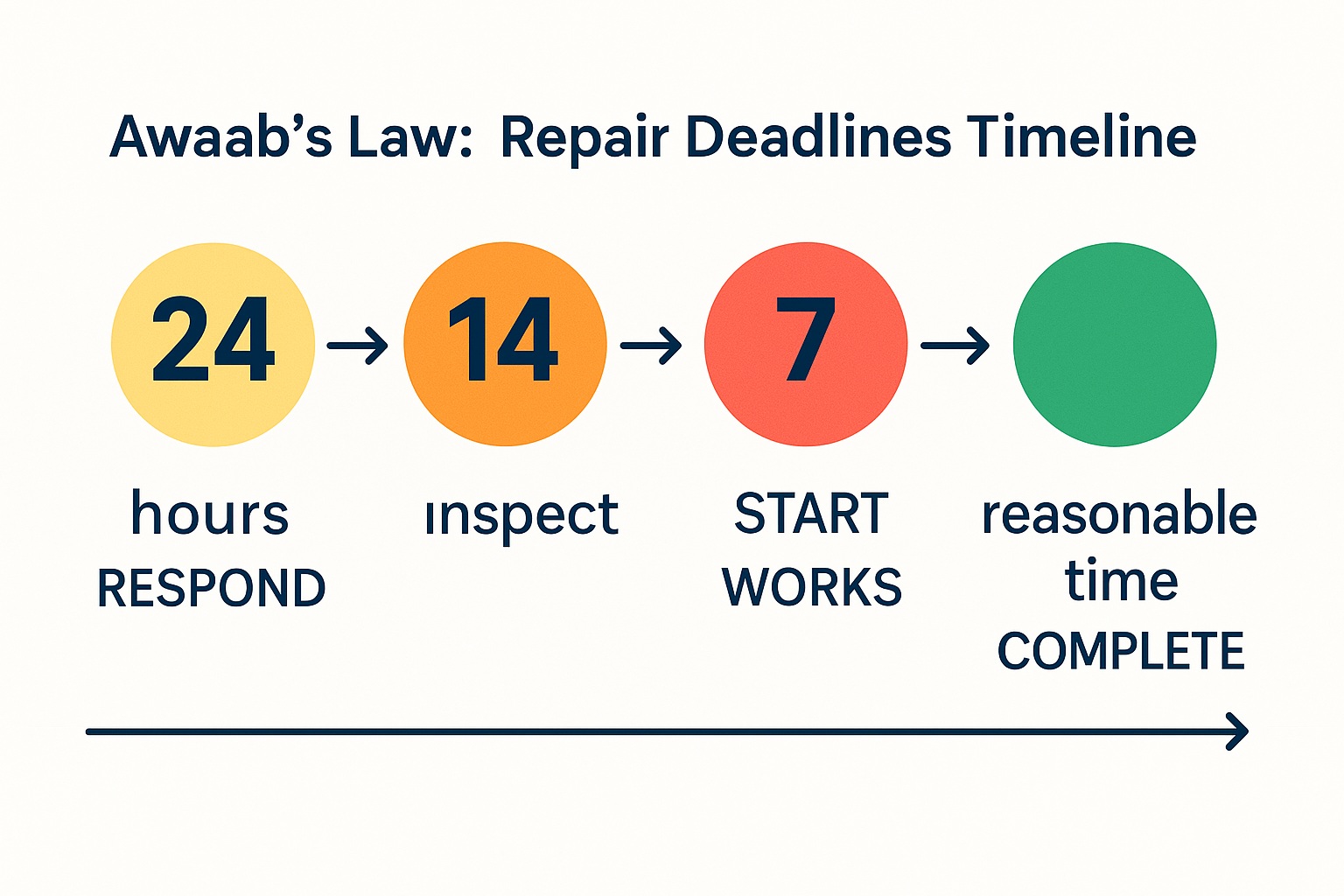
Within 24 Hours (for serious hazards)
Landlords should plan to respond very quickly to reports of:
- Serious hazards
- Health and safety risks
- Severe damp
- Severe mould
This doesn't necessarily mean completing the repair, it means acknowledging the issue, assessing the risk, taking immediate protective action if needed, and logging the incident.
Within around 14 Days
Draft guidance suggests landlords will be expected to:
- Carry out an inspection within a set period
- Assess the full scope of the problem
- Provide the tenant with a written plan of works within that timeframe
The "Start Works" Deadline (7 Days)
Once you have issued your written plan (within a short period after inspection), strict deadlines are expected for starting the work, similar to those already used in social housing:
- Emergency Hazards: Works must begin very quickly, typically within 24 hours.
- Significant Hazards: Works are expected to begin within about 7 days for significant hazards, in line with emerging guidance that mirrors the social housing approach.
Completion ("Reasonable Time")
The law requires works to be completed within a "reasonable time." This protects you if a part is on order or a wall needs to dry out, provided you have started on time and kept the tenant informed.
Why This Is a Challenge
Awaab’s Law introduces a new emphasis on documented timelines.
Courts, councils, insurers, and now tenants will expect to see:
- When the tenant reported the issue
- When you responded
- When you inspected
- When repairs were completed
- Evidence of the works
- Photographs or reports
This is more than “doing repairs on time.”
It’s about proving you handled them correctly.
What Landlords Must Start Doing
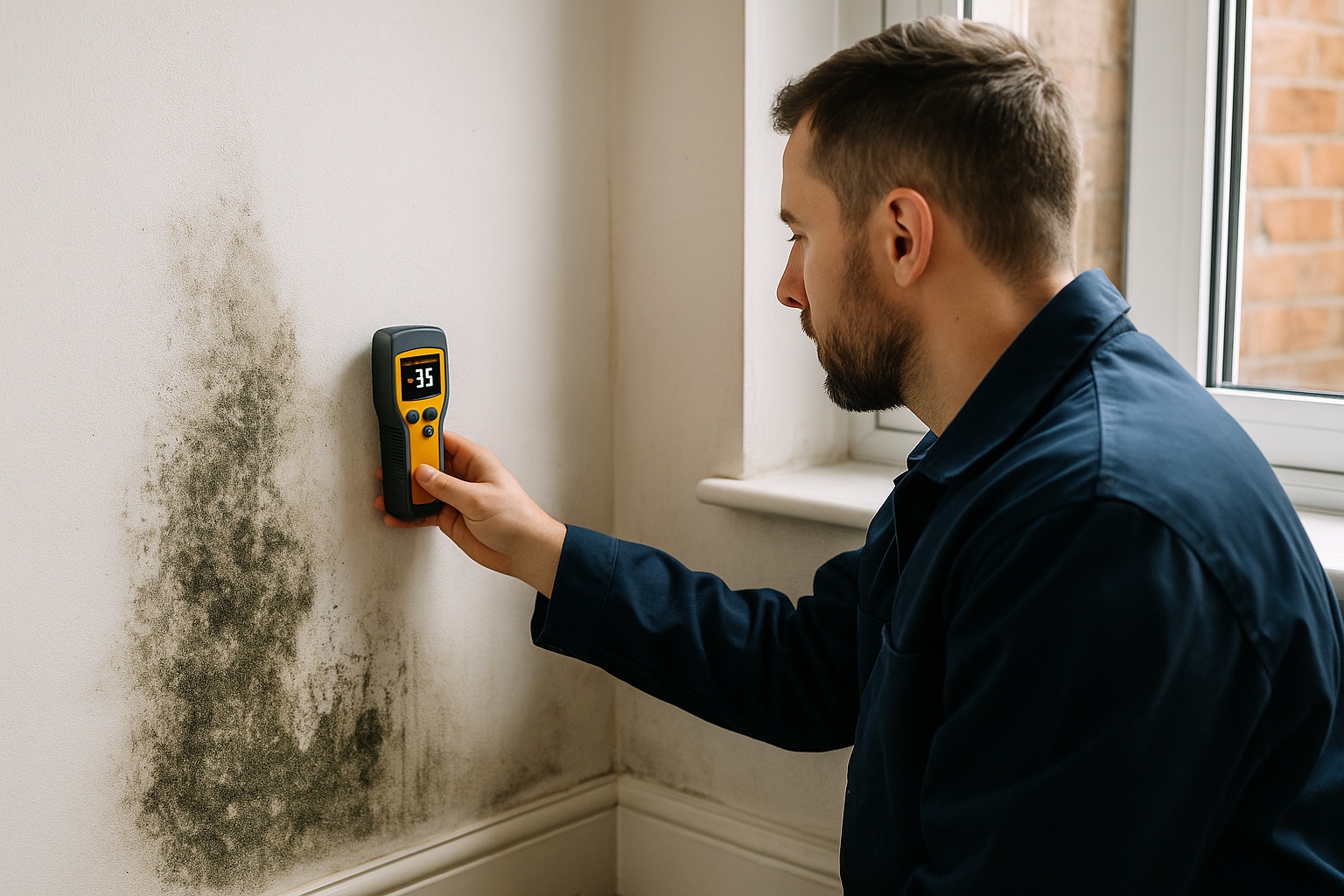
To comply, you should begin logging:
- All tenant repair requests
- The date/time of response
- Notes on your inspection
- Quotes obtained
- Photos before and after repairs
- Contractor invoices
- Completion confirmation
This creates a clear record, showing that you met the expected response and investigation timescales.
📄 Free Checklist: Landlord Survival Checklist 2025
Download our printable, step-by-step checklist covering everything you need to prepare for the Renters’ Rights Act — including Section 21 changes, Awaab’s Law, new repair deadlines, and Property Portal requirements.
Download the Checklist (PDF)The Decent Homes Standard: Now Applying to the Private Rented Sector
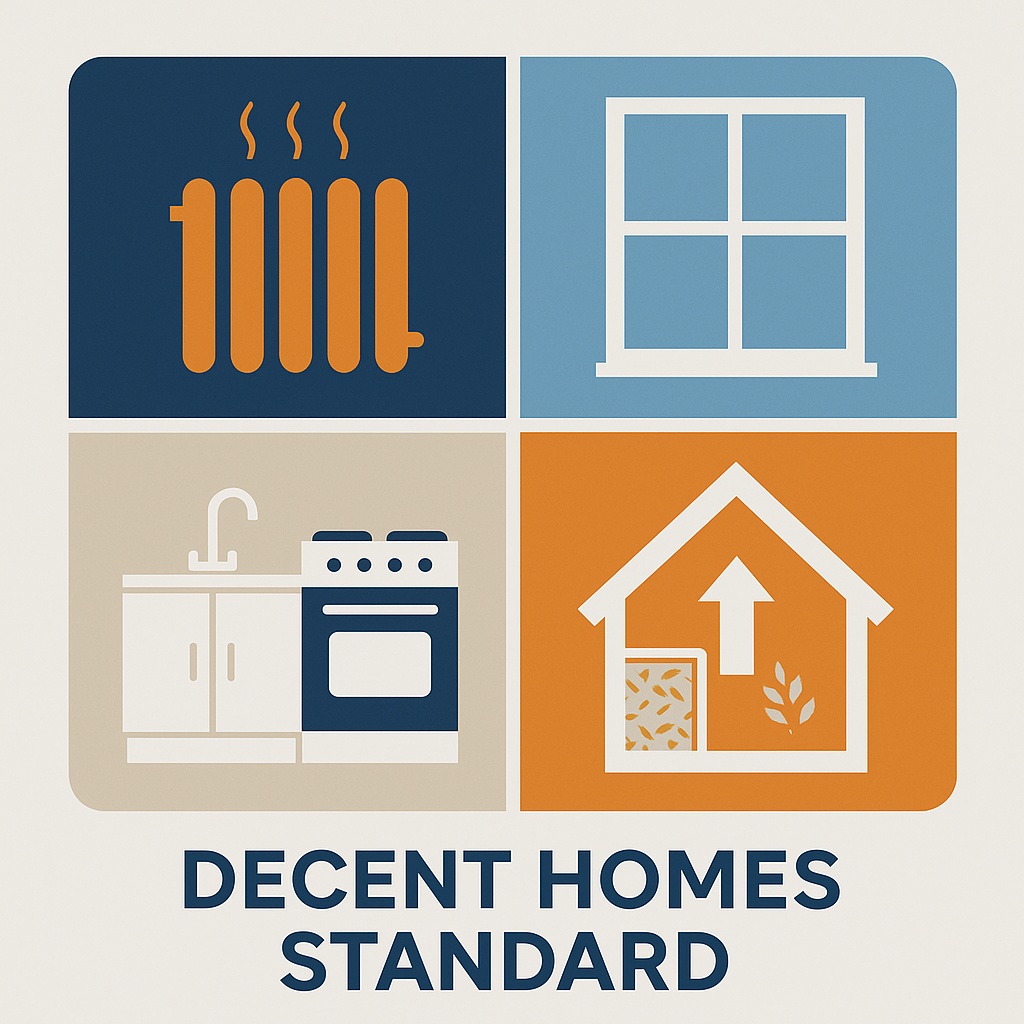
The Decent Homes Standard, long used in social housing, is being extended to private rentals through the Renters’ Rights Act, with detailed requirements for the private sector to be fixed in secondary legislation and a reformed Decent Homes Code. This introduces a new legal baseline that your property must meet, not only at the start of a tenancy but continuously.
The Four Tests
1. The Property Must Be Free from Category 1 Hazards
This covers:
- Fire risk
- Electrical hazards
- Gas safety concerns
- Structural issues
- Excess cold or heat
- Damp and mould
- Drainage issues
- Sanitation concerns
If a hazard exists, you must act quickly—and be able to show the evidence.
2. The Property Must Be in a Reasonable State of Repair
This focuses on:
- Roof condition
- Windows
- Doors
- Kitchens and bathrooms
- Heating systems
- Structural integrity
The emphasis is on preventing deterioration that could become a hazard later.
3. The Property Must Have Modern Facilities
This includes:
- Reasonably modern kitchens
- Reasonably modern bathrooms
- Adequate layout
- Functional fixed installations
Note on Facility Age: Previous guidance suggested kitchens should be under 20 years old and bathrooms under 30 years old. However, specific regulations for the Private Rented Sector are still being finalised. You should use these ages as a "best practice" benchmark, not a confirmed legal hard line, until the government publishes the final Decent Homes Code for private rentals.
4. The Property Must Be Warm and Energy Efficient
Expect attention on:
- Insulation
- Heating performance
- Ventilation
- EPC improvements
This aligns with the wider push towards healthier indoor environments and improved national energy efficiency.
Enforcement Will Strengthen
Councils will gain more power to issue:
- Improvement notices
- Urgent remedial notices
- Rent repayment orders
- Fines
- Banning orders
The Decent Homes Standard gives enforcement teams clear, centralised criteria to judge against.
Frequently Asked Questions: The Renters’ Rights Bill 2025
Q: When will Section 21 be abolished for private landlords?
A: Section 21 ‘no‑fault’ evictions will be abolished when the new tenancy system starts on 1 May 2026. From that date, existing fixed‑term assured shorthold tenancies will convert to assured periodic tenancies, and all new assured tenancies will start as periodic from day one.
Q: Can I still ban pets under the new Renters’ Rights Bill?
A: You cannot simply operate a blanket ban on pets. You must consider each request and cannot ‘unreasonably refuse’ a tenant’s request to keep a pet, although there will still be situations where refusal is reasonable (for example, where building rules or serious safety issues prevent pets).
Q: What is the "CertNudge Digital Logbook"?
A: The CertNudge Digital Logbook is a compliance method designed to prepare landlords for the new Property Portal. It involves creating a single digital file for each property containing all safety certificates (Gas, EICR, EPC), repair timelines, and tenant communications. Having this ready is essential because you will increasingly need to prove compliance when registering and when relying on certain possession grounds or defending complaints.
Q: How much can I increase rent under the new rules?
A: You will be able to increase the rent once every 12 months, up to the market rate, by serving a statutory Section 13 notice and giving the tenant at least 2 months’ notice. Rent review clauses and other contractual mechanisms for increasing rent will no longer be effective, and you will be legally prohibited from asking for or accepting rental bids above your advertised rent.
Q: What are the repair deadlines under Awaab’s Law?
A: Awaab’s Law extends strict hazard response timelines from social housing into the private rented sector. You should plan to:
- Investigate emergency hazards very quickly (for example within 24 hours for emergencies).
- Investigate significant hazards within a defined period (currently proposed around 14 days).
- Start repairs within a short, set timescale after issuing your written investigation summary (for example within about a week for significant hazards), in line with the final regulations once published.
Q: Can I evict a tenant if I need to sell my property?
A: Yes, you can use Section 8 (Ground 1A) to evict if you intend to sell. However, you cannot serve this notice during the first 12 months of a tenancy. You must also provide the tenant with 4 months' notice.
Q: Is registering for the Property Portal mandatory?
A: Yes. Registration on the new Private Rented Sector Database (Property Portal) will be a legal requirement. Landlords will need to register themselves and their properties, and in most cases will need to be registered on the database in order to use certain possession grounds or rely on the full protection of the new regime..
Final Step for Landlords Preparing for 2026: Keeping certificates organised and staying ahead of expiry dates will be essential once the Property Portal and new tenancy rules go live. If you want a simple way to keep every Gas Safety, EICR and EPC stored securely — with automated renewal reminders and a clear compliance status for each property — tools like CertNudge can remove the stress of staying inspection-ready all year round.
Last updated: 26 November 2025 • Based on the latest available guidance on the Renters’ Rights Act and related regulations.
Regulations and timelines may change as secondary legislation is finalised. This guide will be updated accordingly.