
Renters’ Rights Act 2026: The Essential Landlord Compliance Audit (England)
From 1 May 2026, Section 21 ends and tenancies move to a single periodic system in England. This landlord friendly audit walks you through the documents, deadlines and habits you need to stay inspection-ready and reduce avoidable delays or penalties especially if you manage a portfolio.
Renters’ Rights Act 2025: The Essential Landlord Compliance Audit for 1 May 2026 (England)
Important: This article is for general information only and is not legal advice. Regulations change and circumstances vary. If you need advice, speak to a qualified professional.

On 1 May 2026, major changes to the private rented sector in England are due to take effect under the Renters’ Rights Act 2025. For a plain-English overview, see the GOV.UK Guide to the Renters’ Rights Act.
Implementation is phased. This article focuses on the Phase 1 tenancy changes expected from 1 May 2026 in England. Other measures (such as the private rented sector database, the landlord ombudsman, and some property standards changes) are due to follow later and will be set out in further regulations and guidance. You can see the government’s rollout roadmap here: Implementation roadmap.
If you’re managing multiple properties, it’s usually easier (and safer) to keep expiry dates, evidence files and proof-of-service in one place see CertNudge’s Compliance Dashboard.
Key takeaways
- From 1 May 2026, Section 21 ends and tenancies move to a single periodic system (England).
- Possession becomes more evidence-led: organise certificates + proof-of-service now.
- Plan to serve the new prescribed information to existing tenants within one month of commencement (likely by 31 May 2026 if commencement is 1 May).
- Audit the “big four”: Gas Safety, EICR, EPC, and a written statement for any oral tenancies.
Jump to: What changes · Information deadline · Evidence audit · Timeline · Audit anxiety
What changes on 1 May 2026 (England)
The headline change is the end of Section 21 “no-fault” evictions. At the same time, the system of Assured Shorthold Tenancies (ASTs) is being replaced, and existing ASTs are expected to convert automatically into a single, open-ended periodic tenancy model (rather than fixed terms).
For landlords, the key shift is practical: possession and enforcement become more evidence-led. Without Section 21, regaining possession will generally depend on Section 8 grounds and your ability to show you have met the relevant legal and administrative requirements.
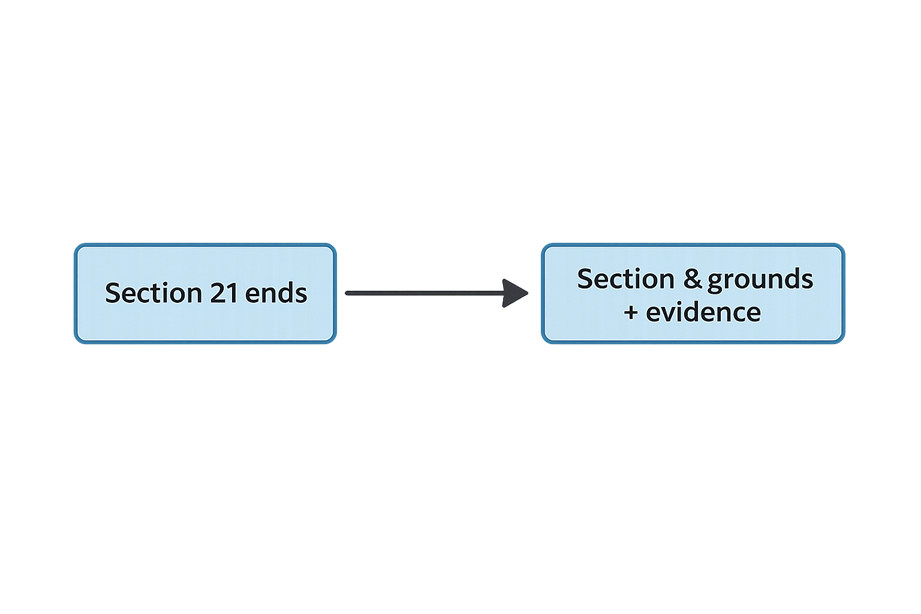
The 1 May 2026 changeover: what’s different
- Automatic transition: existing ASTs will convert to the new periodic tenancy model (you won’t need to re-sign agreements purely to make the tenancy “valid”).
- No new Section 21 notices: landlords will no longer be able to use Section 21 to end a tenancy without giving a reason.
- Rent increases: rent will generally be increased using the Section 13 process, typically no more than once in a 12-month period. Increases are expected to be in line with market rent, and tenants can challenge proposed rises they believe are above market level (see GOV.UK: Rent increases).
Practical tip: Section 21 is the headline, but the risk for many landlords is missing a required document, deadline or proof of service — because those slips can lead to civil penalties and delays when you need to take action.
The information deadline landlords should plan for (up to £7,000)
A key transitional requirement is that landlords must provide tenants with prescribed information about the changes (expected to be via a government-issued document/information sheet). For existing tenancies, this is due within one month of commencement — so if commencement is 1 May 2026, landlords should plan to complete service by 31 May 2026.
If you fail to provide the required information, it can be treated as a civil breach and local authorities can issue financial penalties. (See GOV.UK: Civil penalties guidance.)

Action point
You may not be able to serve the final document yet (depending on when the government publishes the prescribed version), but you can prepare now:
- Maintain a clean list of every tenancy and tenant contact details
- Decide how you will serve key documents (post/email/portal)
- Keep proof of service (certificate of posting, delivery confirmation, email log, portal timestamp)
- Create a simple “one folder per property” structure for certificates + proof of service (e.g. Gas / Electric / EPC / Terms / Service logs)
Why this matters: you may need clear evidence quickly
In the post-Section 21 regime, possession cases are likely to be more evidence-led and paperwork heavy. It’s not enough to have documents somewhere - you need to be able to produce clear, dated evidence that duties were met and key information was provided.
The Evidence Audit – getting ready for Section 8
In a post–Section 21 system, landlords will generally need to rely on Section 8 possession grounds if they want to regain a property. That includes the new grounds aimed at selling (Ground 1A) or moving back in (Ground 1). In practice, this puts far more weight on clear evidence and clean admin.
The key point is that possession becomes more ground-and-evidence dependent, so having your compliance documents organised (and provably served where required) matters more than ever. Read our Section 8 eviction after Section 21 for a detailed look at evidence and templates.
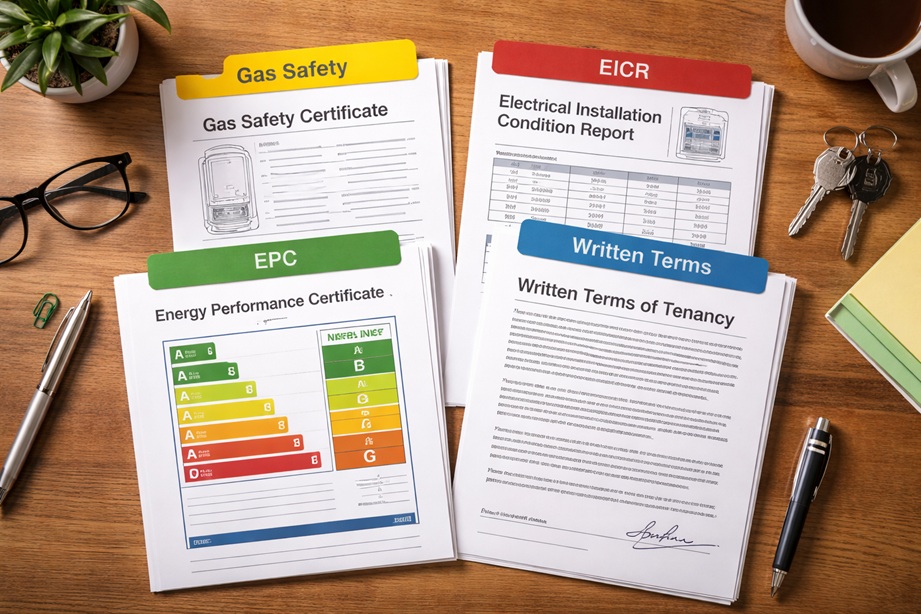
The pre-possession document check: 4 items to audit now
Before 1 May 2026, it’s worth doing a “deep dive” across your portfolio so these core items are in-date, correctly issued, and easy to retrieve (for you, your agent, or your solicitor).
1) Gas Safety Record (CP12)
- What you need: a valid Gas Safety Record for any property with gas appliances/flues, and a process to provide the record to tenants within 28 days of each annual check (and to new tenants before they move in). (External: HSE gas safety records.)
- Why it matters in 2026: missing records or uncertain service dates can slow things down and make your position harder to evidence.
- Audit step: store the certificate plus proof of service (email log, certificate of posting, portal timestamp) in the same place.
2) Electrical Installation Condition Report (EICR)
- What you need: an EICR that is in-date (typically at least every 5 years, or sooner if the report says so), plus evidence you shared the report with the tenant and acted on any required remedial works. (External: Electrical safety guidance.)
- Why it matters in 2026: keep the report and any follow-up works in one place for inspection readiness.
- Audit step: store the report, invoices, remedial evidence/certificates and a “served on” note with proof of service.
3) Energy Performance Certificate (EPC)
- What you need: a valid EPC (usually 10 years) and a record of the current rating for each property.
- Why it matters in 2026: MEES still applies and EPCs are easy to forget because they last longer. (External: MEES guidance.)
- Audit step: confirm expiry dates and keep the EPC reference so it’s quick to retrieve.
4) Written statement of terms (for existing oral tenancies)
- What you need: if a tenancy is genuinely oral/verbal (no written contract), plan to provide a written statement of the key terms under the new regime.
- Timing: plan on delivering this within one month of commencement (so, if commencement is 1 May 2026, aim for by 31 May 2026).
- Audit step: draft a simple statement covering tenant names, property address, rent amount and frequency, start date, deposit details (if any), and any key obligations you both rely on in practice.
The “paperwork vs proof” problem
For portfolio landlords, the real issue is rarely whether documents exist - it’s whether you can prove what was done and when.
In a Section 8 scenario, “I’m sure I sent it” isn’t a strategy. A stronger approach is to standardise:
- what “proof” looks like (certificate of posting, tracked delivery confirmation, email sent log, portal timestamp)
- who is responsible for sending (you vs agent)
- where proof is stored (same folder as the certificate)
- how you name files consistently (so they’re searchable under pressure)
- how you record exceptions (e.g., bounced email / no access)
A spreadsheet can track expiry dates, but it won’t reliably hold the actual evidence pack you may need at short notice - especially if you’re coordinating contractors, agents, and multiple properties.
The Survival Strategy – timeline & next steps
A smooth transition on 1 May 2026 comes down to planning and proof. One practical point to understand early is the 12-month “protected period” at the start of a tenancy: in most cases, landlords cannot use the move-in or sale grounds during the first 12 months, and those grounds also have longer notice requirements — so if you’re thinking of selling or moving back in during 2026–27, forward planning matters. (External: Grounds for possession guidance.)
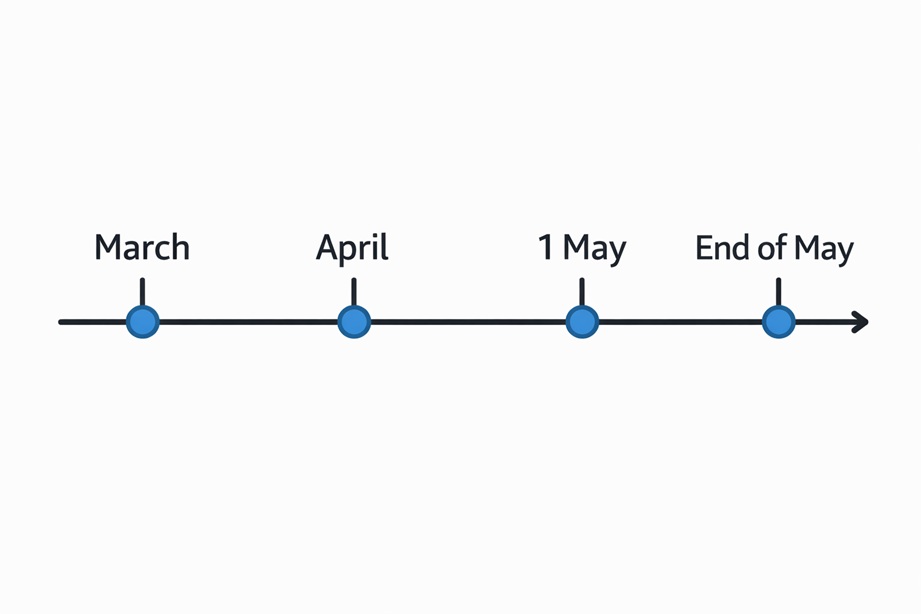
The 2026 compliance roadmap (England)
Use this sequence to reduce last-minute stress and avoid missing key deadlines. Treat the dates as an operational plan — and focus on evidence and proof of service, not just “having a certificate somewhere”. Some operational details will be confirmed in secondary legislation and official guidance, so diarise a final check closer to commencement.
March 2026: get ready to issue the prescribed information
- Confirm tenant names and contact details for every property
- Choose a standard service method (post/email/portal) and stick to it
- Set up a simple way to keep proof of service for each tenancy
April 2026: run your “pre-audit” across the portfolio
- Gas Safety Record (where gas applies)
- EICR (in-date, with any remedial works evidenced)
- EPC (valid and easy to retrieve)
- Any “legacy” arrangements (especially oral tenancies that will need a written statement of terms)
If anything expires around spring/summer 2026, book contractors early — you’ll avoid the “everyone needs an appointment at once” bottleneck.
1 May 2026: commencement day (what you should expect)
- Existing ASTs convert to the new periodic tenancy system (no need to re-sign purely because the law changed)
- Section 21 will no longer be available, so future possession will generally be via Section 8 grounds
- Your focus shifts from “having documents somewhere” to being able to produce evidence quickly if needed
By the end of May 2026: the key tenant-information deadline
Landlords must provide existing tenants with the required prescribed information about the changes within one month of commencement (so if commencement is 1 May 2026, aim for no later than 31 May 2026). Keep a simple record of what was sent, when, how, and where the proof is stored.
Don’t leave this until the last week. Treat it like a portfolio-wide task with a tracking sheet and proof-of-service saved alongside the document.
How to avoid “audit anxiety” in a bigger portfolio
Think of this as a repeatable monthly routine: track expiry dates, store the evidence, and log how key documents were served. Under the new regime, compliance tracking stops being optional admin and becomes basic risk management — especially if you manage multiple properties or use contractors/agents.
- Move beyond spreadsheets (or tighten them up): spreadsheets can track dates, but they don’t reliably manage the evidence (the correct PDF, the right version, and proof of service). Try CertNudge 14 day free trial no card required
- Build a “compliance pack” per property: one folder (physical or digital) containing certificates, remedial works, and service proofs — ready to share quickly if needed. (Internal:
- Use layered reminders: set alerts at 60 / 30 / 14 days before expiries so you have time to book contractors, chase reports, and fix gaps without panic. (Internal: Reminder Schedule.)
Bottom line: the Renters’ Rights Act is likely to increase the importance of clear, retrievable evidence and consistent admin. A short, focused audit now can reduce avoidable penalties, delays, and stress later.
Key sources (England)
Last reviewed: 13 January 2026
Review again by: 1 April 2026 (then monthly until commencement)